A new book A Primer in Augustinian Spirituality: Communion, Participation, Mission introduces readers to Augustinian spirituality by offering a clear guide to its major ideas, vocabulary, and sources in Augustinian texts. While the book discusses the roots of Augustinian spirituality in the fourth and fifth centuries, it is chiefly concerned with what Augustinian spirituality means for us today in a post-Vatican II context and with a newly elected Augustinian Pope Leo XIV. Below is an interview with the book’s author, Joe Kelley, about some of the ideas in his book and what he learned in writing it.
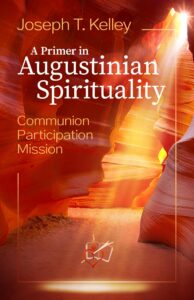
Q: In A Primer in Augustinian Spirituality, you focus on three core aspects of that spirituality: communion, participation, and mission. Can you explain how you came to those three themes as your organizing principles and explain what you mean by each?
Kelley: In his Forward to the book, Father Joe Farrell, OSA, identifies communion, participation, and mission as the three major themes of synodality: of what it means to be a listening Church. I had worked for a number of years on the Augustinian International Commission on Synodality. During that time, I began to see how these three synodal themes align with Augustine’s theology and spirituality. So I “borrowed” them to organize the book!
Communion names the heart, the core of Augustinian spirituality; participation elaborates the virtues necessary for living it; and, mission explains the value of Augustinian spirituality for the wider church and the world.
Q: You say in the Preface to the book that your “first Augustinian memory” was as a child listening to Fr. Robert Sullivan, OSA, preside over mass. How do you think being introduced to Augustinianism through a friar of the Order of St. Augustine shaped your view of Augustinian spirituality?
Kelley: People who come to know or study Saint Augustine do so by a variety of routes. For many it is the study of philosophy, for others it is theology or church history, for still others it is the study of his skill as a Latin rhetorician. For some of us it was the Augustinian friars who brought him to our attention. They were our teachers, our pastors, our friends.
When I began to study Augustine, I did so surrounded by men and women devoted to the religious and spiritual dimensions of his heritage. I studied Augustinian texts in a very personal and communal context. Since my high school years, Augustine helped me form the questions and find the language to express the deeper questions of human meaning and purpose.
Q: In chapter three, you discuss the value of contemplation and dedicated prayer, as outlined in the Rule II.11. What advice do you have to someone who wants to practice contemplation but is struggling to do so given the many distractions that surround us?
Kelley: I was always intrigued by the short passage in Augustine’s Rule about the oratorium—the prayer room in the monastery. It should be kept free at all times, he wrote, for people who wanted to pray “outside the regular hours for prayer.” It should not be used for any other business—negotium.
Augustine’s advice remains valuable for our digital age. We need to make time and keep space in our lives for quiet reflection. We need to safeguard our own personal oratorium both for daily prayer and for unexpected momentary calls to prayer. Our negotium should not impinge upon that time and space. Those of us who do not live in a monastery need to find the support and encouragement from others who also place a value on contemplation and want to make the time and protect the space for daily prayer. People who share that conviction are out there. We need to find them.
Q: The Catholic Church’s focus on synodality under Pope Francis seeks to create a more listening Church. In chapter fours and seven, you discuss the Augustinian approach to listening and how they relate to synodal listening. Can you explain what Augustinian listening can mean for synodality?
Kelley: An Augustinian approach to listening emphasizes the importance of God’s grace to be able to listen. To listen is to exercise the will, to intentionally devote time and effort to the sometimes difficult task of active listening. Augustine emphasizes our need for divine grace to strengthen our wills and guide our efforts to listen with love and openness.
Contemplation includes a growing ability to listen to the Spirit of God speaking ever so subtly within our souls and among the events of our lives. That inner listening slowly spills over into outer listening. As we progress in the attention and humility with which we listen to God, we also grow in our ability to listen attentively and humbly to other people. In this way, community grows and our communion with one another in Christ deepens.
Q: You note in the book’s introduction that in light of the Second Vatican Council the Augustinians have been focused on sharing Augustinian spirituality with the laity. What do you think the laity in particular should know about Augustinian spirituality and/or their role in the Augustinian Family?
Kelley: The laity will find that Augustinian spirituality affirms their union with Christ and one another as the core of their spiritual lives, and that they share this with the friars and nuns. The nine virtues outlined in part two, Participation, can be lived out in their family and work places. It is a spirituality for all Christians. The Augustinian Family includes all of us, and the Order is searching for more ways to reflect this reality.
Q: You state in chapter one that “Augustinian spirituality is an ongoing exploration of the mystery of our human nature, a restless desire to discover who we are and the reason for our existence” (33). Right now we are in a moment of potential existential crisis about the nature of human beings in light of AI technology. What do you think that Augustinian spirituality can say to us in this moment to help guide our approach to this technology?
Kelley: A friend of mine just finished a book that addresses this question – Restlessness and Belonging: Augustinian Wisdom for the Digital Empire, Autumn Alcott Ridenour, Baylor 2025. She identifies Augustinian anthropology, his understanding of what it means to be human, as a prescription against AI domination. Augustinian spirituality emerges from and extends his anthropology.
The affirmation of our communion with one another, of the virtues that help us participate and engage one another, and the hope that communion and participation give us will prevent AI from defining us. Spirituality is an antidote to the more malignant dangers of AI.
Q: Several times throughout the book you reference Pope Leo XIV. How do you think his life as an Augustinian will shape his papacy?
Kelley: When it comes to how he addresses divisive issues in the Church, such as abortion, LGBTQ+, integral ecology, social justice and so forth, Leo will invite us to first focus on and dwell together in what we all have in common: our union with Christ and one another. He will ask that discussion, debate and decision emerge from our communion, and not be pre-determined by political or social allegiances. I also think he will invoke the virtues outlined in part two to help guide us through these discussions.
Q: You end the book with a chapter on hope. What do you think Augustinian spirituality can teach us about hope right now?
Kelley: I think our hope needs to arise from its theological companions of faith and love, rather than from confidence in human initiative and inventiveness. We are so painfully aware in these times of how fallible and self-centered human beings are—witness the spread of war, economic injustice, and even slavery. Augustine’s oft-cited pessimism about humanity seems justified.
Hope arises as an effective agent when rooted in the abiding presence of God, as understood in many religions. Hence, hope today needs inter-religious dialogue to spread.
Q: You have been on many pilgrimages walking in the footsteps of Augustine. What advice do you have for those who go on pilgrimage or for those who are unable to do so but still want to experience something like it?
Kelley: Pilgrimage is a theme in many of Augustine’s writings, especially in his sermons and his commentaries on the Psalms. One thing I learned while leading pilgrimages is to expect the unexpected. You never knew what challenges and opportunities would arise!
Our life of faith is a pilgrimage, with unexpected challenges and opportunities. You can be a pilgrim without ever traveling to another country simply by envisaging your own life as a pilgrimage of constant discovery and response. That is the message I tried to leave with my fellow travelers at the end of a journey: the physical pilgrimage was just a “training” for the pilgrimage of life.
Q: Was there anything you learned about yourself or Augustine in the writing of this book?
Kelley: While writing, I kept thinking of Augustine’s exquisite sensitivity to the power of words, and at the same time his acknowledgement of their limitation when it came to expressing the reality of God or our experience of God. That’s why I end the “Afterword” with a reflection on the silent witness of Our Mother of Good Counsel.
Q: What for you personally is the most meaningful aspect of Augustinian spirituality?
Kelley: It is the Mystery of Christ: the astonishing revelation that God became human in the person of Jesus of Nazareth, and the endless reflection on the truth of the Incarnation and its implications for the destiny of humanity.
Q: Do you have a favorite passage of Augustine’s writings? Why is it your favorite?
Kelley: Ah! Perhaps the most difficult question! At this point in my life, it is Confessions III.6.11: Tu autem eras interior intimo meo et superior summo meo—You were more inward to me than my most inward part, and higher than my highest.
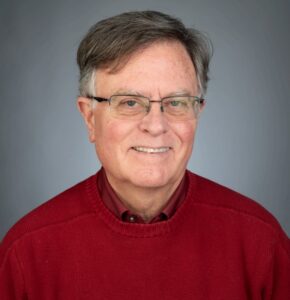 Joe Kelley is Professor Emeritus of Religious and Theological Studies at Merrimack College where he taught for 50 years and also served as provost and vice president. He earned his Ph.D. from Boston University in the Psychology of Religion and is a retired clinical psychologist, licensed in Massachusetts. He earned a D.Min from the Andover-Newton Theological School, an MA and STB in theology from Catholic University of America, and a BA in philosophy from Villanova University. He has authored six books and multiple scholarly articles and chapters on the thought of Saint Augustine, the psychology of religion and pastoral theology. He is a board member and president of the Augustinian Heritage Institute, which oversees English translations for the New City Press project The Works of Saint Augustine. His more recent work addresses Augustinian spirituality and its relevance in contemporary contexts and cultures. For that work he draws from his 15 years as a member of the Order of Saint Augustine and his continuing friendships with many friars. He and his wife Alina Rudnicka met and married in Poland 43 years ago and are Augustinian lay affiliates. They have an adult daughter and son, and enjoy their (so far) three granddaughters.